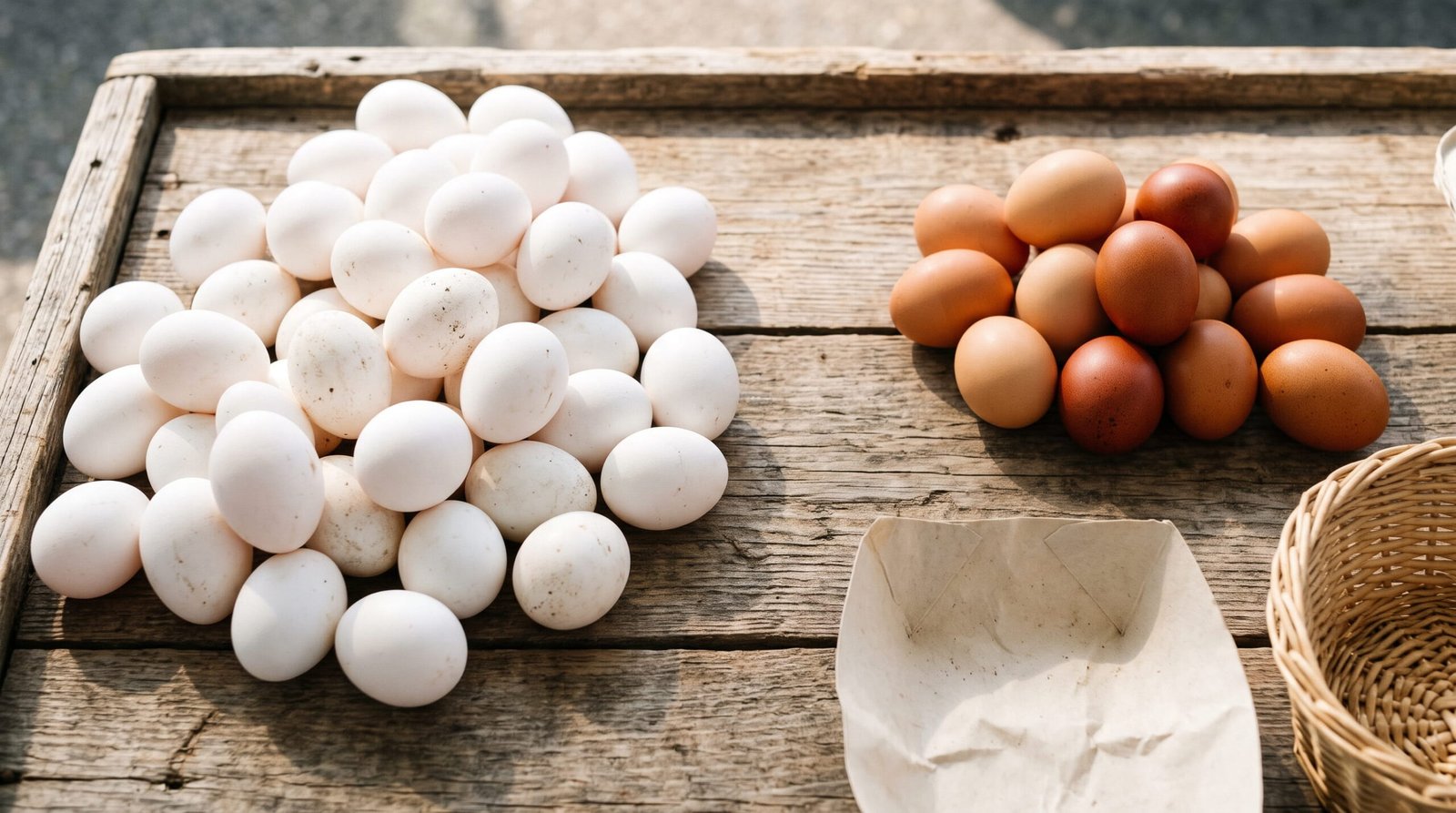
Mexico eats about 410 eggs per person a year, and 99% of the eggs it produces are white, according to industry figures. In the UK, the same carton would look almost the opposite.
The reason has nothing to do with nutrition. It comes down to which hens each country started with, and the habits that grew around them.
The country that eats the most eggs
Mexico’s National Poultry Producers Union (UNA) says Mexicans ate an average of 24 kilos of eggs each in 2025, which it counts as about 410 eggs. The union calls Mexico the world’s top consumer of fresh eggs per person.
Eggs there are also bought differently. According to UNA figures reported by UnoTV, 68.4% of Mexican eggs are sold a granel, loose by the kilo, rather than in sealed cartons.
And when an egg isn’t white, Mexicans don’t call it brown. It’s a huevo rojo, a “red egg.” You’ll see the same phrase on brown eggs in some US grocery stores that cater to Latino shoppers, including H-E-B’s Mi Tienda line in Texas.
Why Mexico went white and the UK went brown
Shell color is set by the breed of the hen, according to the USDA. Leghorn, White Rock and Cornish hens lay white eggs, while Rhode Island Red, New Hampshire and Plymouth Rock hens lay brown ones.
Countries tend to stick with whatever breeds they adopted first. A feature in the poultry trade magazine Feed Strategy explains that early flocks created a shopping habit, and those habits are extremely hard to change. The same article puts the split at 99% brown in the UK and 98% white in Mexico and Iran.
Latin America isn’t one market, either. Brazil leans white while Colombia prefers brown, according to the hen breeder Lohmann.
There’s a twist in the story of the white egg itself. The White Leghorn, the hen behind most North American eggs, traces back to Tuscany, a region of Italy where, Feed & Grain reports, about 80% of shoppers buy brown.
What the color actually tells you
Not much. The USDA says nutrient levels are not significantly different between white and brown eggs, and Mexico’s consumer agency, Profeco, says the same about huevo blanco and huevo rojo.
Price is the one place color can show up. Brown-egg hens tend to be larger and eat more feed, which is part of why brown cartons often cost more in US stores.
At the store, compare the size and the date on the carton before you pay extra for a darker shell.