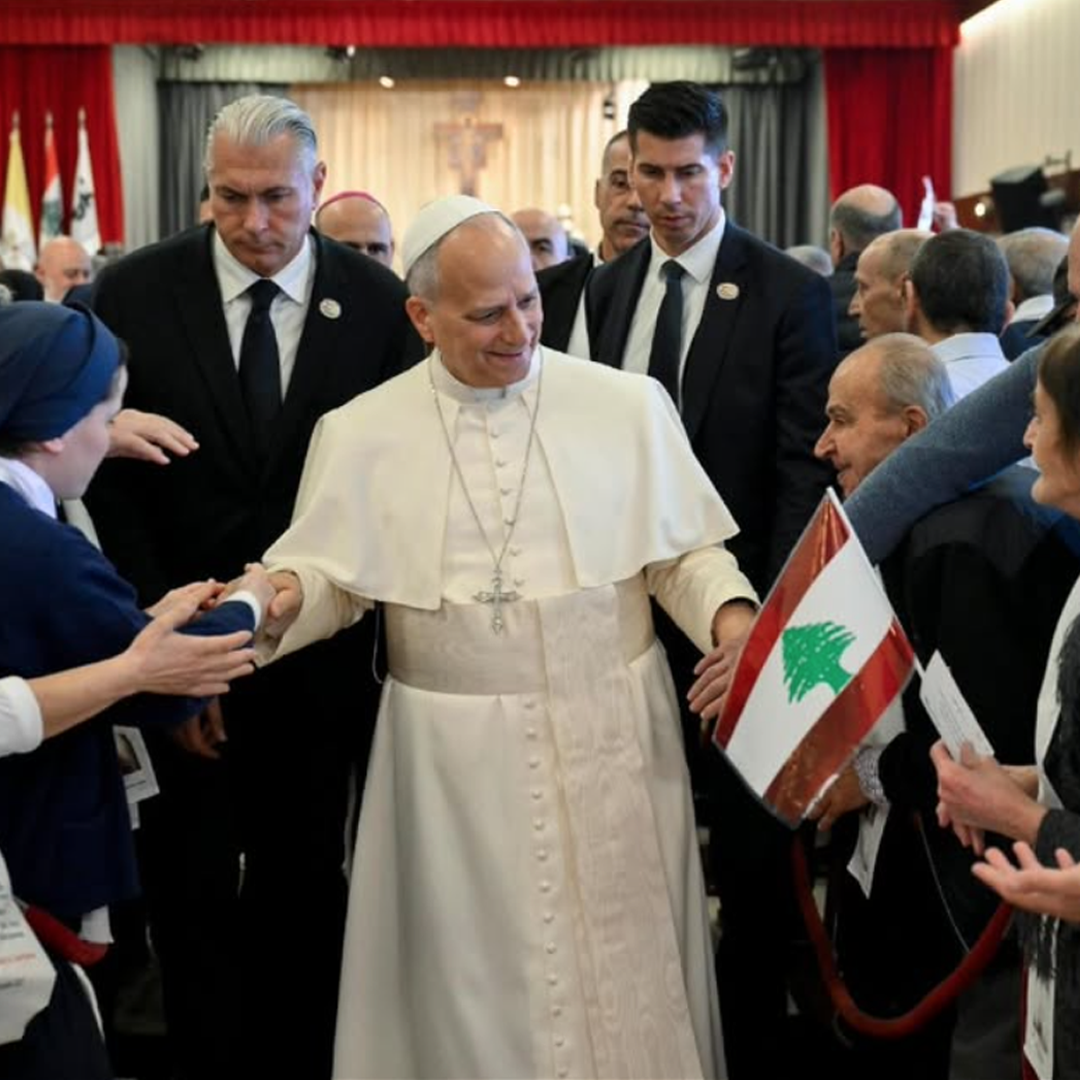
It was a journey filled with encounters: he spoke with authorities, prayed with local communities, visited sites that marked the history of Christianity, and shared with Orthodox leaders. From the outset, he conveyed a powerful message: beyond labels or denominations, Christians are family and must walk together. For this reason, Pope Leo XIV’s visit is seen as a historic event and is considered a “unifying platform” by modern spiritual leaders. ✝️ 🇹🇷
The most symbolic stop was Iznik, a quiet city yet epic in its historical significance. It was there, 1,700 years ago, that the Council of Nicaea was held, where foundational principles of Christianity were defined, such as the belief in one God in three persons (Father, Son, and Holy Spirit). Leo XIV took advantage of this setting to deliver a powerful message: it is time to overcome past divisions, such as the schism between Catholics and Orthodox in 1054, and strive for a real and vibrant unity.
Before departing for Lebanon, he celebrated a Mass with the Byzantine rite in Istanbul and another before thousands of people in Iznik. In his closing address, he highlighted three themes that resonate with the current reality: first, that the world needs authentic peace, built with actions and deeds, not just words. This means acting, making decisions, and performing acts that build peace, but without forgetting, the Pope emphasized, “that this peace is not only the fruit of human effort, but a gift from God.” In fact, His Holiness pointed out: “Peace is implored through prayer, penance, contemplation, and that living relationship with the Lord that helps us discern the words, gestures, and actions we must undertake, so that they may truly be at the service of peace.” Second, the ecological crisis is another challenge our Churches must face, as Leo XIV pointed out. It is the threatening ecological crisis that requires a spiritual, personal, and communal conversion to change course and safeguard creation: “Catholics and Orthodox are called to collaborate to promote a new mentality, in which everyone feels like a steward of the creation that God has entrusted to us,” the Pope affirmed. And third, technology must be used ethically, responsibly, accessibly, and at the service of all people, not just a privileged few. He also emphasized the need to build bridges, listen to one another, and create community. It sounds simple, but it is a powerful reminder for our generation: unity, peace, and responsibility are not just hashtags, but actions that build the future.
The trip also had a political and cultural component: Turkey, as a bridge between East and West, served as a symbolic space to discuss coexistence, diversity, and understanding among religions. Furthermore, Leo XIV emphasized that the Pope’s role is to serve as a bridge of communion between all the churches, something he intends to promote from the very beginning of his pontificate.
In short, the Pope did not go to Turkey for a vacation: he went to reflect on history, to invite Christians, and the world, to unite, to care for the planet, to use technology responsibly, and to build peace. All of this was delivered with a tone of love and peace that resonates with any generation: if we want a different future, we must build it together. “You young people have a gift that seems to elude us adults; you have hope, you have time, much more time to dream, to organize yourselves and to do good.” Pope Leo XIV📢✨⛪