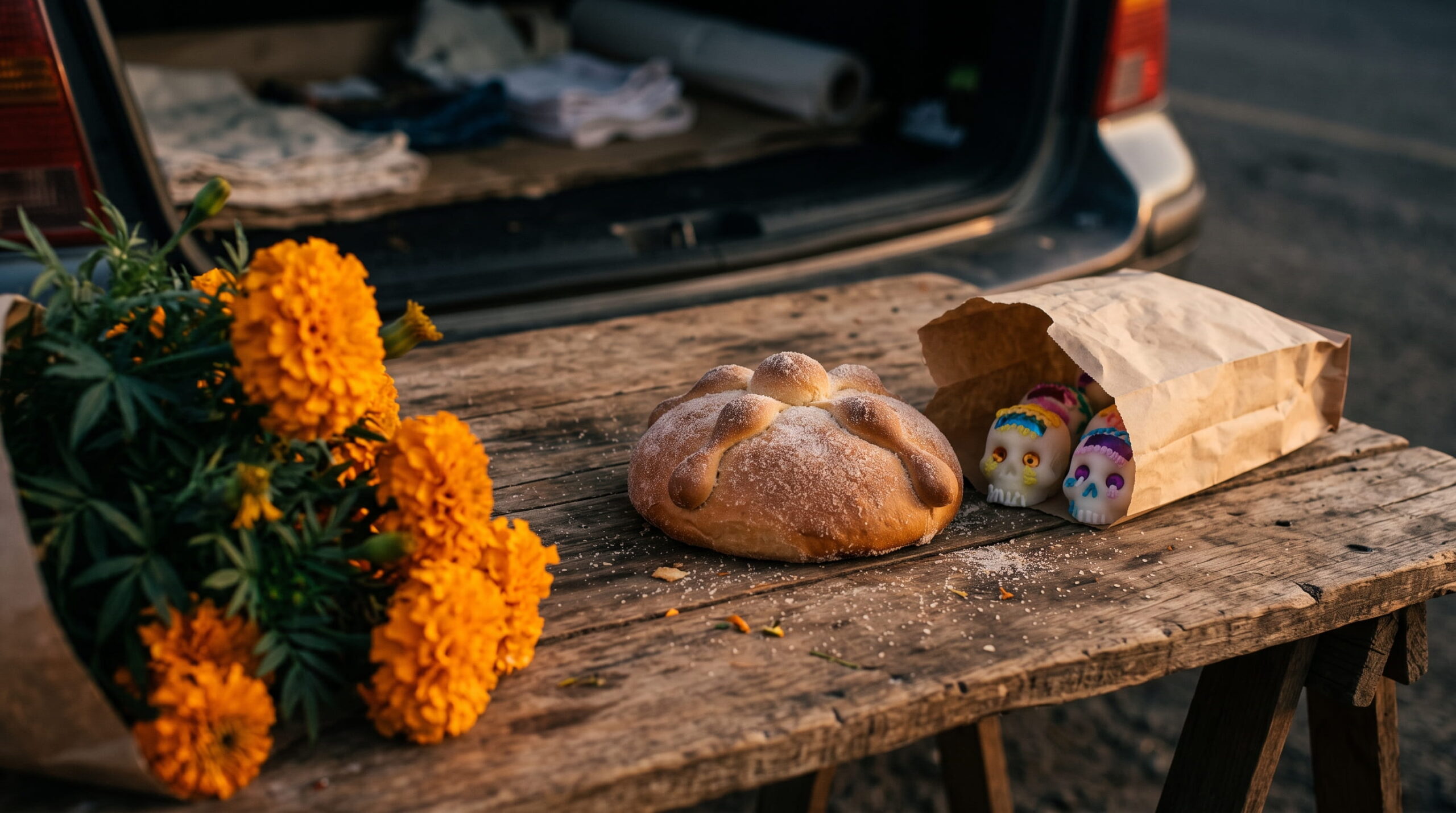
Pan de muerto, calaveritas de azúcar and Mexican chocolate are generally allowed into the U.S. from Mexico, as long as you declare them. The bright orange cempasúchil is a different story: U.S. Customs and Border Protection (CBP) put it on its prohibited list, along with chrysanthemums, in its Día de los Muertos reminder of October 28, 2025.
That matters if you’re heading south this month to visit family, tend a grave or shop for the ofrenda. Día de Muertos falls on Sunday, November 1, and Monday, November 2, 2026, and CBP says its agriculture specialists often find prohibited items meant for altars and gravesites around this time.
Can you bring pan de muerto from Mexico?
Yes, in most cases you can bring pan de muerto from Mexico. CBP’s long-standing guidance for travelers lists bakery items, candy and chocolate as generally admissible, which covers pan de muerto, conchas and other pan dulce. You still have to declare every food item, and the CBP agriculture specialist at the port of entry has the final word.
What goes inside the bag matters more than the bread. A loaf of pan de muerto is fine. A box of your tía’s pork tamales is not: CBP’s El Paso field office lists all products containing pork, along with raw poultry and eggs, among the items not allowed in.
Is cempasúchil allowed across the border?
No. Under CBP’s most recent guidance, cempasúchil is not allowed. In its national reminder of October 28, 2025, CBP said traditional Aztec marigolds can host the cotton seed bug, a pest capable of seriously damaging the U.S. cotton industry, and listed them as prohibited together with chrysanthemums.
If that surprises you, you’re not alone. Earlier CBP messages were softer. In 2024, the El Paso field office said cempasúchil could enter as a cut flower without roots or soil. Years before that, the San Diego office allowed marigolds that passed a pest inspection. The 2025 national reminder is the latest word, so plan around it. If CBP publishes a new reminder before November 1, 2026, that one is the version to follow.
The greenery is off-limits too. The CBP San Diego field office has warned that murraya, also called orange jasmine, is prohibited because it hosts the Asian citrus psyllid, an insect that spreads a disease that kills citrus trees.
The simplest fix: buy your flowers on this side of the border.
The ofrenda checklist: what crosses and what stays
Here’s how the most common ofrenda items look under CBP guidance, as of October 2026:
| Item | Coming from Mexico | What CBP says |
|---|---|---|
| Pan de muerto, conchas, pan dulce | Generally allowed | Declare it |
| Calaveritas de azúcar and other candy | Generally allowed | Declare it |
| Mexican chocolate | Generally allowed | Declare it |
| Cempasúchil | Prohibited | National reminder, Oct. 2025 |
| Chrysanthemums | Prohibited | National reminder, Oct. 2025 |
| Murraya (orange jasmine) | Prohibited | San Diego field office |
| Pomegranates, guavas, mangoes, quince, apples | Not allowed for personal use | El Paso field office, 2024 |
| Potatoes, sweet potatoes, yams | Not allowed for personal use | El Paso field office, 2024 |
| Pork products, raw poultry, eggs | Prohibited | El Paso field office, 2024 |
Yes, that means the guavas for your ponche should come from a store here, too.
Declare it, even the conchas
The rule that saves you money is simple: declare everything. CBP requires travelers to declare all plant and agricultural products, and says prohibited items can be held or refused even when they’re meant for a cultural or personal celebration.
- Declare all food and flowers, even the items you’re sure are allowed.
- Pack them where you can reach them, so inspection is quick.
- Check the official lists before you go. CBP points travelers to its “Bringing Food into the U.S.” and “Can I Bring It?” pages and its “Know Before You Go” guide.
- Skip the fruit and the flowers and buy them once you’re home.
Skipping the declaration is what costs you. According to Border Report, CBP said in 2025 that penalties for undeclared, prohibited personal items typically start at $300, and commercial importations can face fines of up to $250,000.
The ofrenda doesn’t need anything confiscated to be complete. Bring the pan and the calaveritas, then let the marigolds come from a mercado near you.