Frank Rubio, the NASA astronaut who holds the U.S. record for the longest single spaceflight, is training for a mission that will test two different moon landers without leaving Earth orbit. NASA laid out the latest version of that plan in an update published on November 4, 2026.
Rubio is one of four astronauts assigned to Artemis III, the 2027 flight NASA now describes as a planned 14-day mission. If it works, it clears the way for astronauts to land on the moon again.
The year nobody planned
Rubio’s first trip to space was supposed to be a standard station stay. It turned into 371 days aboard the International Space Station, after the Soyuz capsule meant to bring his crew home was damaged. He landed in Kazakhstan on September 27, 2023, after the longest single spaceflight by a U.S. astronaut, according to NASA.
He did not arrive at NASA as a typical engineer. Before joining the 2017 astronaut class, he was a U.S. Army officer and a physician, and during his long mission he completed three spacewalks totaling 21 hours and 24 minutes.
Two landers, one capsule
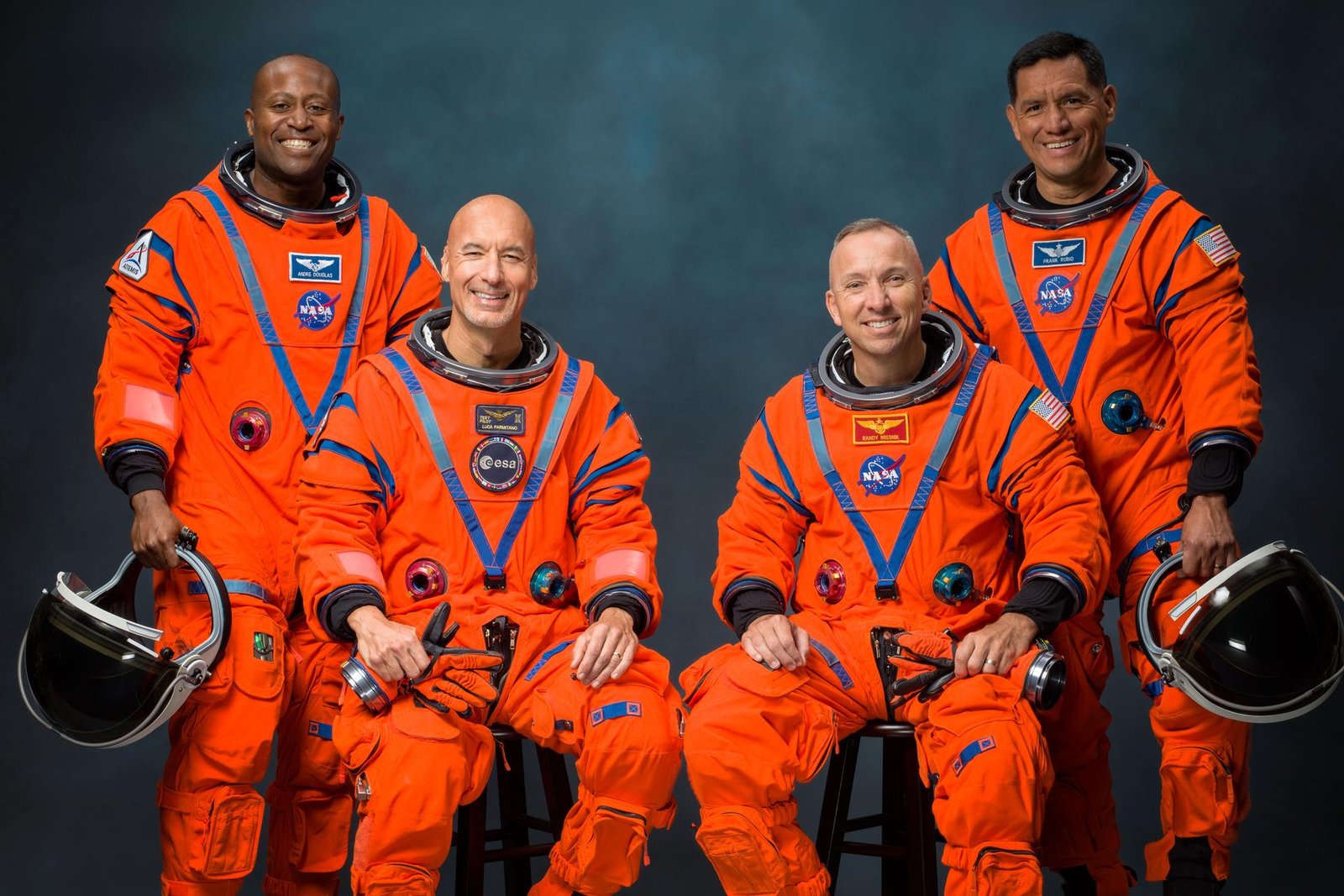
On June 9, 2026, NASA named Rubio a mission specialist for Artemis III, alongside commander Randy Bresnik, pilot Luca Parmitano of the European Space Agency and fellow mission specialist Andre Douglas.
The NASA update spells out the sequence. Blue Origin launches a test version of its Blue Moon lander. NASA’s SLS rocket then sends the crew up in the Orion capsule to dock with it. After that, SpaceX launches a Starship lander test article, and Orion undocks from Blue Moon to dock with Starship.
The goal is simple to say and hard to do: prove that Orion can link up with both companies’ landers before anyone trusts one of them on a real descent. NASA is targeting that crewed landing, now called Artemis IV, for 2028. CBS News compared the setup to Apollo 9, which tested the lunar module in Earth orbit in March 1969.
The El Salvador connection
Rubio was born in Los Angeles, and his NASA biography calls him a Florida native, but his roots run through Central America. His mother lives in El Salvador, and when he launched in 2022, he became the first astronaut of Salvadoran origin to go to space.
When NASA named the Artemis III crew in June, outlets from El Salvador to Argentina covered his assignment as a Latino milestone. The mission is still a rehearsal, but it is the one that decides when people walk on the moon again.
Next time the moon is full, remember an Army doctor with Salvadoran roots is helping clear the path back.