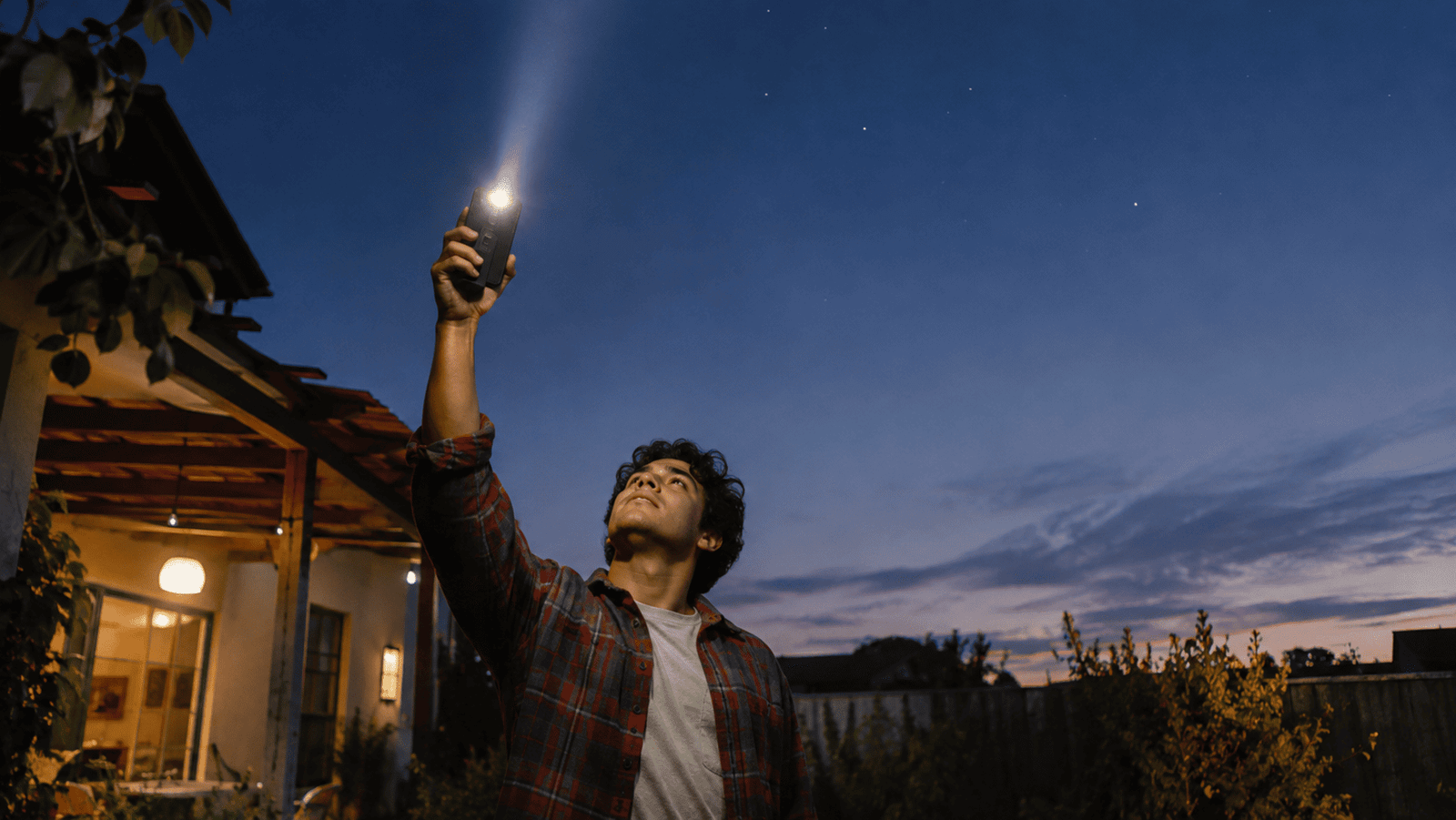
Tonight, Tuesday, November 17, 2026, NASA wants you to step outside after sunset, point a light at the sky and flash “VGR” in Morse code. It’s the agency’s way of marking a record: early Wednesday, Voyager 1 becomes the first human-made object to reach one light-day from Earth.
NASA calls it Shine Bright for Voyager’s Light-Day. The idea, in the agency’s words, is a symbolic wave of golden light circling the planet, one backyard and balcony at a time.
Your phone can tap out the code for you
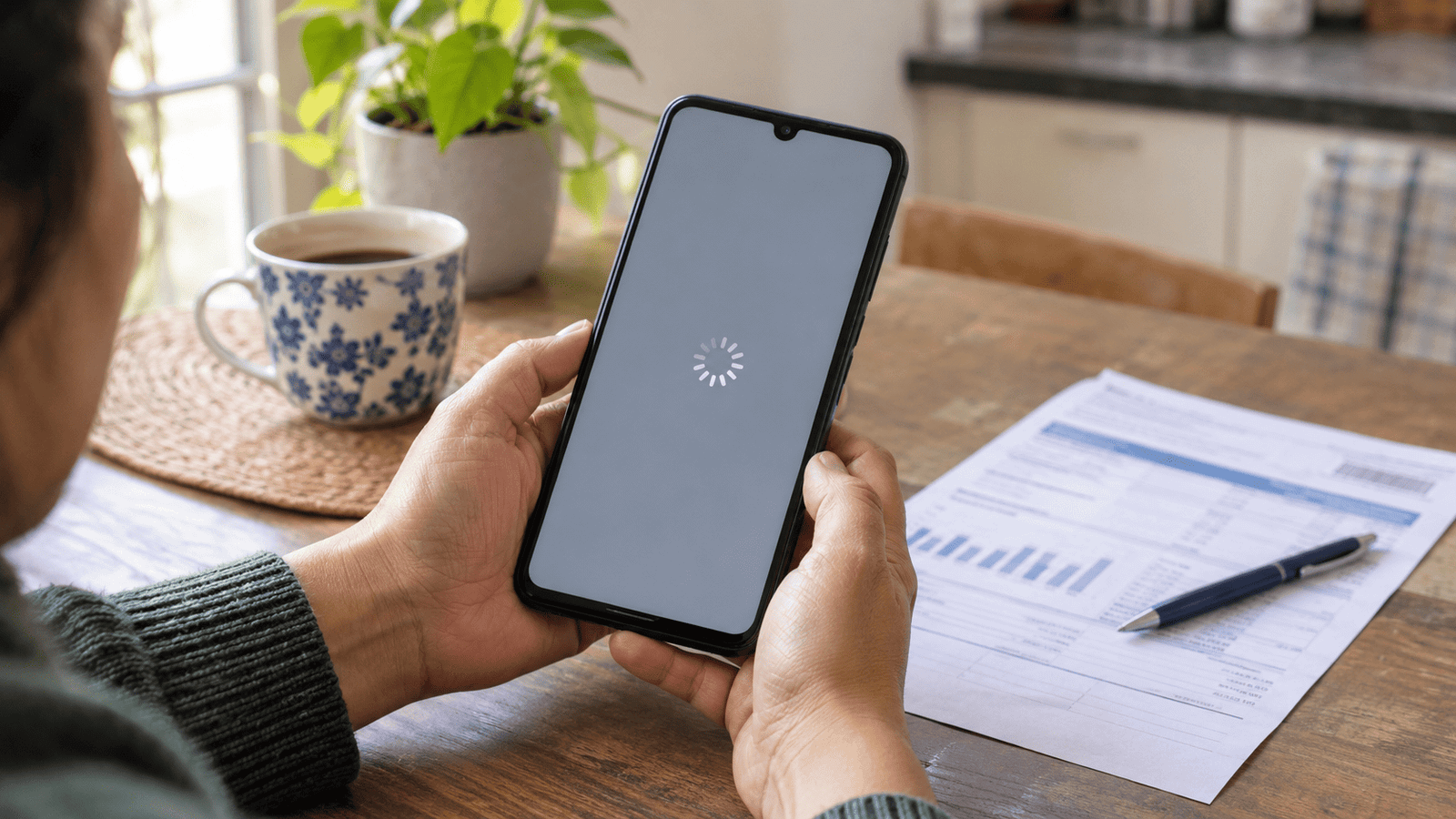
The easiest route is NASA’s automated flasher at go.nasa.gov/vgr. Open it in your phone or tablet browser, point the screen at the sky, and it spells out the signal.
Prefer to do it by hand? NASA says a flashlight, glow stick, solar lantern, bike light or your phone’s light all work. Use the switch, or cover the light with your hand or a piece of cardboard.
VGR is Voyager’s call sign. Here’s the pattern:
- V: three quick flashes, then one long
- G: two long flashes, then one quick
- R: one quick, one long, one quick
Quick flashes last under a second, long ones about a second. NASA suggests a short pause inside each letter, a second or more between letters, and repeating the whole thing for about a minute.
Voyager won’t see it, and that’s fine
NASA describes the flashes as symbolic. As IFLScience points out, a beam of light spreads out far too much to be detected across that distance.
The distance itself is very real. Voyager 1 hits one light-day at 5:16:07 a.m. EST (2:16 a.m. PST) on Wednesday, November 18, according to NASA. That’s 16,094,799,096 miles, the span light covers in 24 hours. From then on, a command sent from Earth takes a full day to arrive, and the reply needs another day to come back.
The probe launched in 1977 and is still moving at nearly 38,000 mph.
Post your signal, then hear from the team
NASA asks participants to photograph or film their signal and share it on social media, tagging @NASA.
The people who fly Voyager will speak next. On Thursday, November 19, at 12 p.m. EST (9 a.m. PST), NASA’s Jet Propulsion Laboratory in Pasadena, California, hosts a discussion on both Voyager spacecraft, streamed at nasa.gov/live. Speakers include Voyager project manager Suzanne Dodd and project scientist Linda Spilker, per NASA’s advisory.
Set a reminder for sunset tonight and give Voyager 1 one minute of your light.