Every empire has a defining moment, that instant when leaving the past behind becomes the only way to dominate the future. For Tesla, that moment has arrived, and now, in addition to rolling, they are also walking.
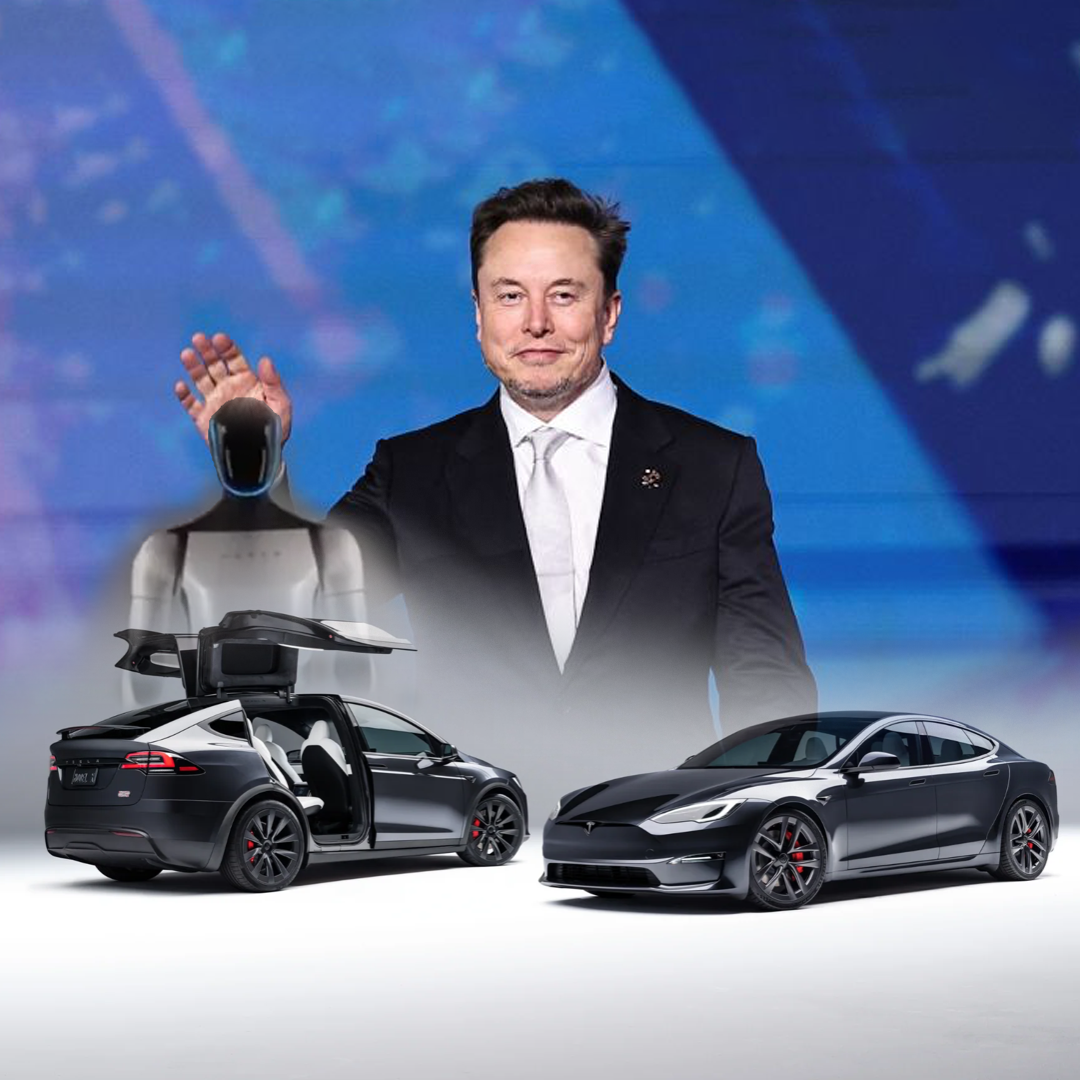
Elon Musk confirmed that the company will stop producing the Model S and Model X, two of the vehicles that defined Tesla’s premium era. Now, those production lines at its factory in Fremont, California, will be converted into manufacturing centers for Optimus, its humanoid robot powered by artificial intelligence.
As we shift to an autonomous future, Model S & X production will wind down next quarter.
— Tesla (@Tesla) January 29, 2026
If you’d like to own one of them, now’s a good time to place your order.
Tesla wouldn’t be what it is today without Model S & X and their (early) owners – thank you for your support over… pic.twitter.com/4J06T1QjVM
The announcement makes it clear that this is an industrial adjustment and a change in DNA. Tesla no longer wants to be seen solely as an electric car manufacturer, but as a technology company that leads the convergence between AI, robotics, and advanced automation. ⏻
Launched in 2012 and 2015, the Model S and Model X were key to building Tesla’s global reputation and demonstrating that an electric car could be desirable, fast, and aspirational. However, over the years, their commercial impact has diminished. Today, the Model 3 and Model Y account for the majority of sales, thanks to their scalability, price, and production efficiency. Tesla plans to completely eliminate both models by mid 2026, freeing up physical space, human talent, and strategic resources for what Musk considers the next great revolution: humanoid robots. 🚙
Optimus is designed to perform repetitive, physically demanding, or high-risk tasks, whether in factories, warehouses, or even everyday environments. Musk has even hinted that, in the long term, Optimus could be worth more than Tesla’s entire automotive business. This is no small exaggeration, we are talking about a potential market that ranges from heavy industry to the home. The company also clarified that the transition in Fremont does not necessarily imply layoffs, but rather a progressive reorganization towards production focused on next generation technologies. 🤖
Identity and future, that’s the real twist for Tesla. Because more than just saying goodbye to two of its most iconic models, Tesla is closing an era that opens the door to the world to come. In doing so, it sends a clear message to the market, its competitors, and the world: the future it envisions, in addition to being able to drive itself, it also walks, learns, interacts, and works. 🔄
And so, what began as a company that reinvented the electric car is now betting on redefining the relationship between humans and machines. Because sometimes, moving forward doesn’t mean accelerating, but completely changing direction.